
Analytics
The 5 Best Web Analytics Tools in 2025
Privacy-first dashboards, GA4, and revenue-focused analytics compared — so you can pick the right tool to understand your traffic without slowing down your site.
Web analytics has changed. Cookie banners, GDPR, and slow tracking scripts have pushed founders toward lighter, privacy-first tools that still answer the questions that matter: where do visitors come from, what do they do, and what drives revenue?
We compared five of the best analytics tools for 2025 across privacy, ease of use, and depth of data. Here's how they stack up.
Last reviewed: January 2025 · 5 tools compared
Quick comparison
| # | Tool | Best for | Pricing |
|---|---|---|---|
| 1 | DataFast | SaaS founders who want revenue attribution, not just pageviews | Paid plans with a free trial |
| 2 | Google Analytics 4 | Teams that need free, deep data and Google Ads integration | Free (GA4); paid Analytics 360 for enterprise |
| 3 | Simple Analytics | Privacy-conscious teams that want a clean, no-cookie dashboard | Paid plans; free trial available |
| 4 | Pulsable | Founders who want real-time data in a minimal interface | Affordable paid plans |
| 5 | Plausible Analytics | Developers who want open-source, self-hostable analytics | Paid cloud plans; free if self-hosted |
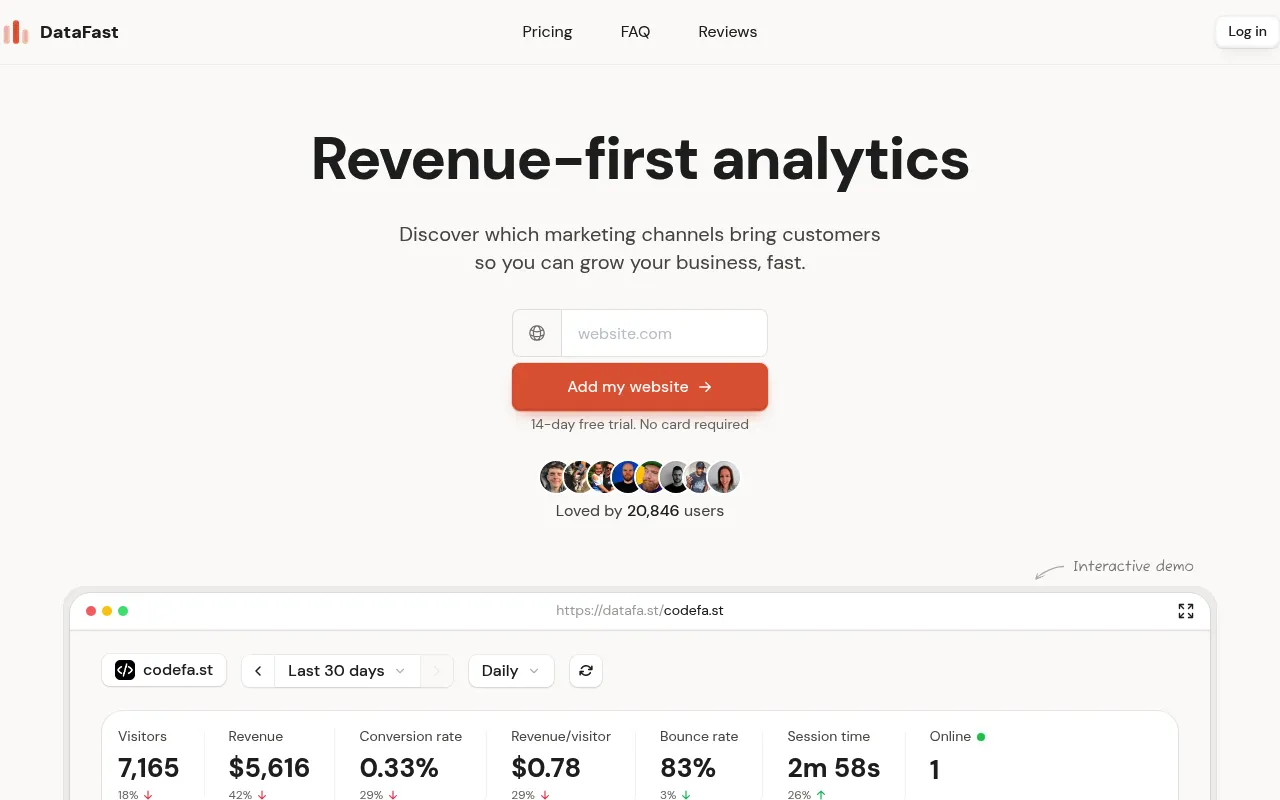
DataFast
Top pickRevenue-focused analytics built for SaaS founders.
DataFast is a lightweight, privacy-friendly analytics tool designed specifically for indie hackers and SaaS founders. Instead of drowning you in vanity metrics, it ties traffic to revenue so you can see which channels, pages, and campaigns actually drive paying customers.
- Marketing attribution tied to real revenue
- Cookie-free, GDPR-friendly tracking
- Simple one-script install
- Goal and conversion tracking out of the box
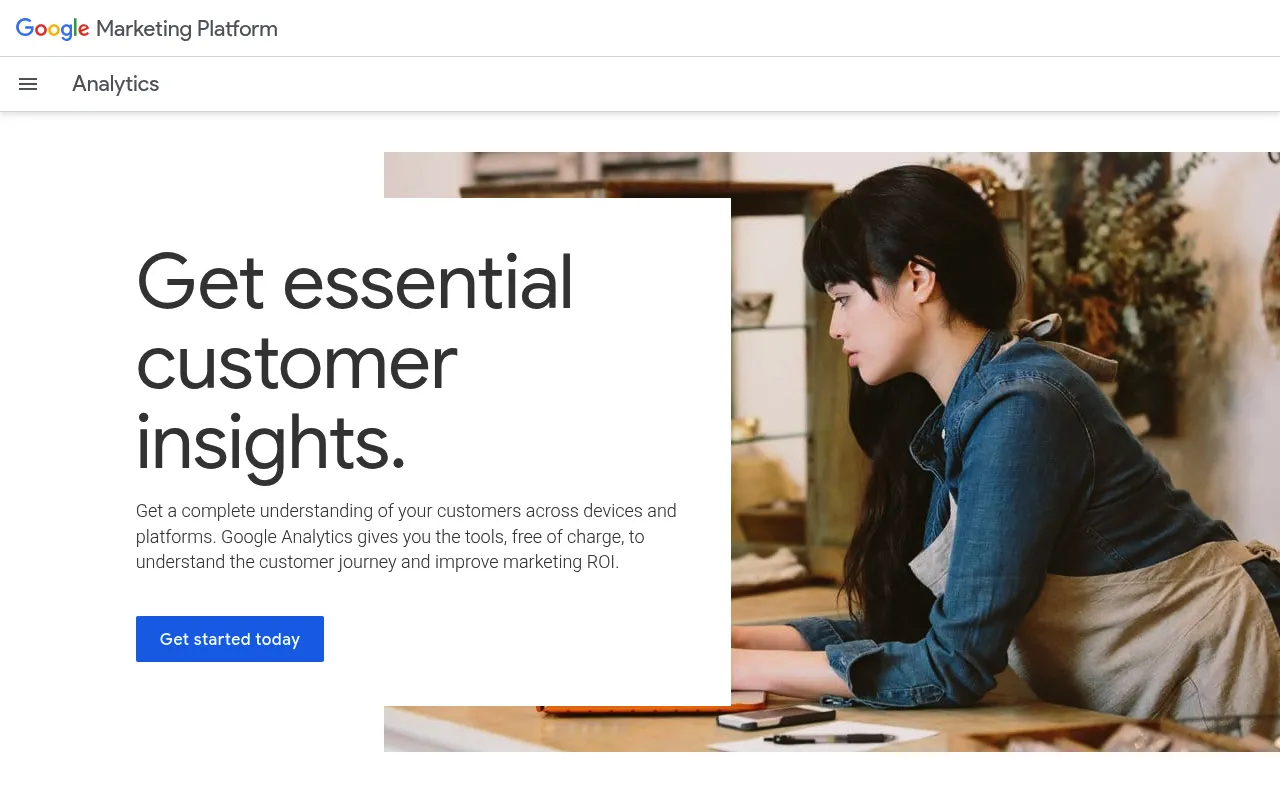
Google Analytics 4
The free industry-standard, now event-based with GA4.
Google Analytics 4 is the most widely used analytics platform in the world and it's free. GA4's event-based model, cross-device tracking, and deep integration with Google Ads make it powerful — though its complexity and privacy trade-offs push many small teams toward lighter alternatives.
- Completely free for most sites
- Event-based tracking and funnels
- Native Google Ads and BigQuery integration
- Audiences and remarketing
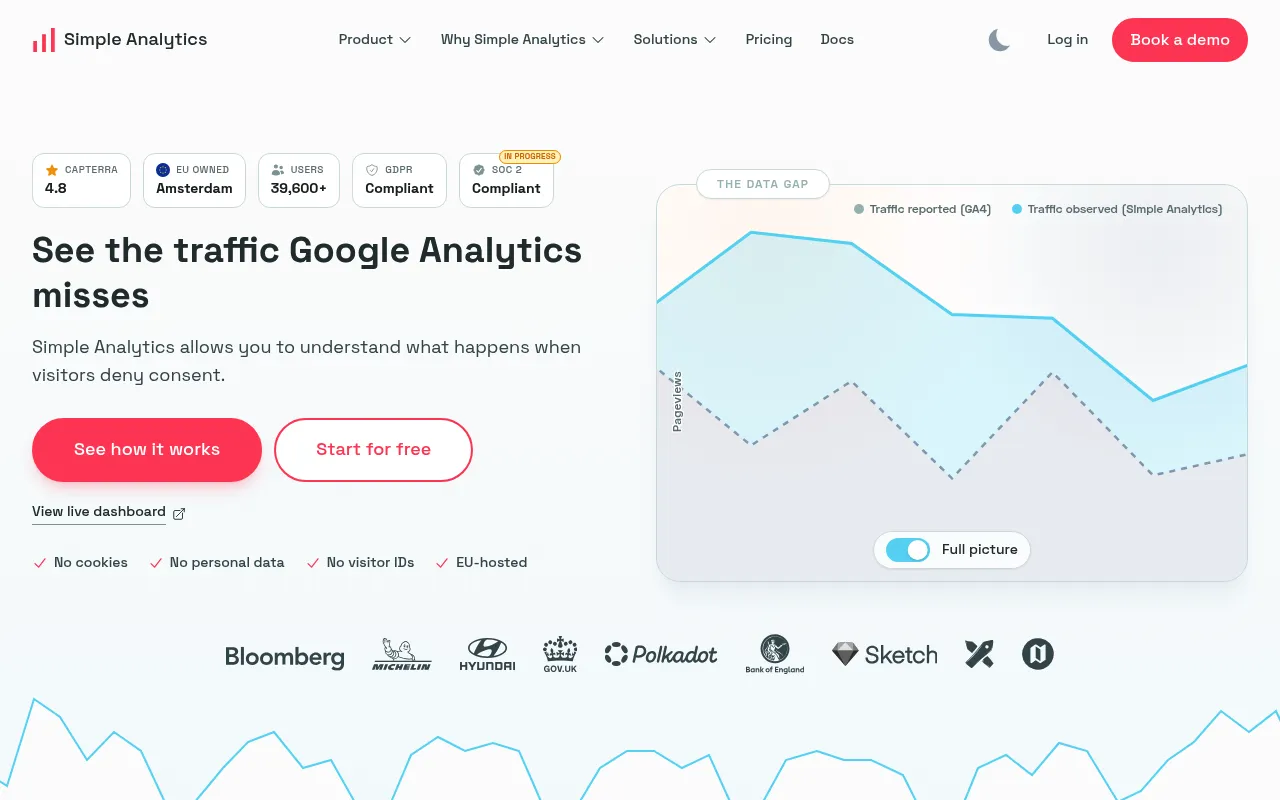
Simple Analytics
Privacy-first analytics with a beautifully simple dashboard.
Simple Analytics is a European, privacy-first alternative that collects no personal data and needs no cookie banner. Its single-page dashboard shows the essentials — visitors, pages, referrers — without the learning curve of GA4, plus optional AI insights.
- No cookies and no cookie banner required
- GDPR, CCPA, and PECR compliant by design
- Lightweight script that won't slow your site
- AI-generated insights and email reports
Pulsable
Real-time, privacy-friendly analytics for modern websites.
Pulsable focuses on fast, real-time analytics with a clean interface and privacy-friendly tracking. It's a strong fit for founders who want live visitor data and the core metrics that matter without the bloat of enterprise suites.
- Real-time visitor and event tracking
- Privacy-friendly, lightweight setup
- Clean, founder-friendly dashboard
- Core traffic and referrer metrics
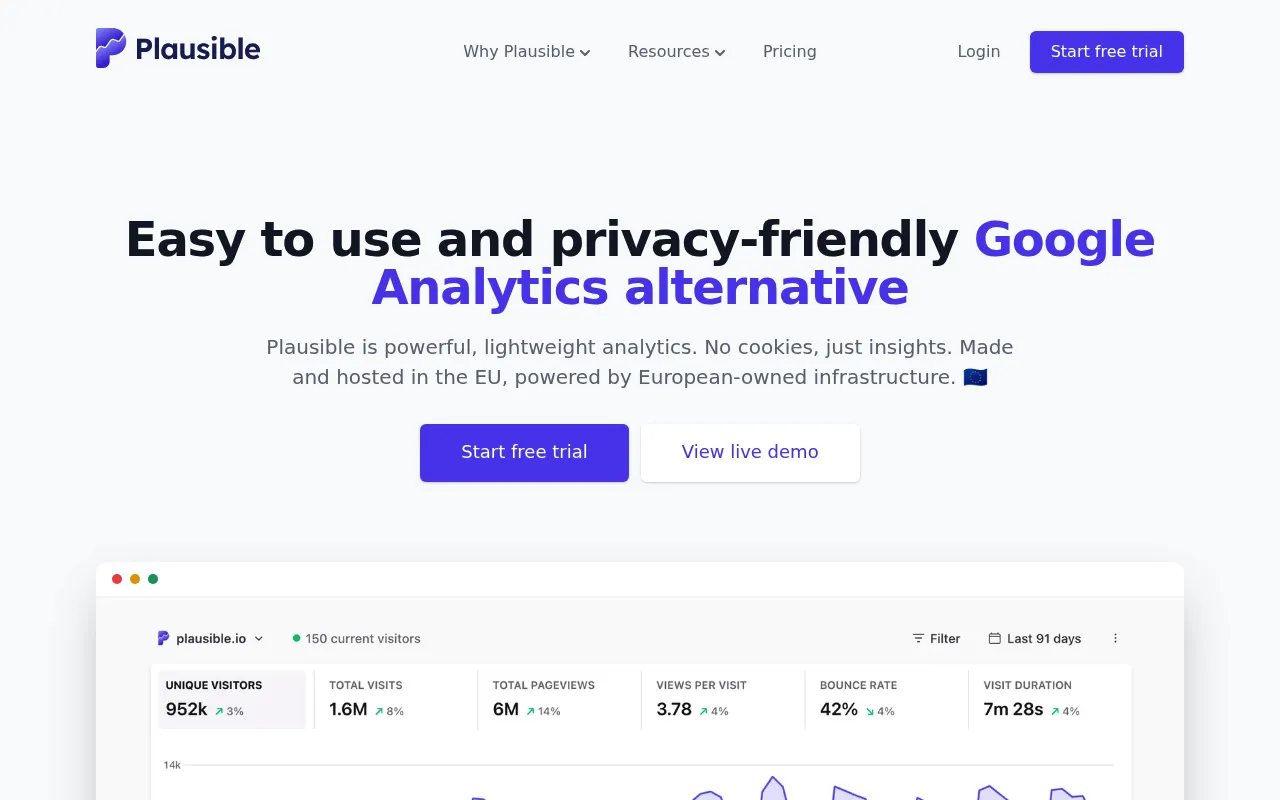
Plausible Analytics
Open-source, self-hostable, privacy-first analytics.
Plausible is a popular open-source analytics tool that you can use as a hosted service or self-host. It's cookie-free, lightweight (under 1 KB), and GDPR-compliant, making it a favorite for developers who value transparency and data ownership.
- Fully open source and self-hostable
- Script under 1 KB for fast loads
- No cookies, GDPR/CCPA friendly
- Simple goals and campaign tracking
How to choose the right analytics tool
The best analytics tool is the one you'll actually check every day — so start with clarity, not features. If a dashboard overwhelms you, you won't use it, and unused data is worthless. Google Analytics 4 is the most powerful free option, but its event-based model has a real learning curve. Privacy-first tools like Simple Analytics, Pulsable, and Plausible strip everything back to the numbers most founders care about: visitors, top pages, referrers, and conversions.
Privacy and compliance are now table stakes. If you serve visitors in the EU or UK, cookie-based tracking usually requires a consent banner under GDPR — and banners hurt conversion and data quality. Cookie-free tools sidestep this entirely, collecting anonymous, aggregated data with no banner required. That's a genuine advantage for both compliance and user experience.
Think about what decision the data should drive. If you're growing a SaaS, pageviews are a vanity metric — what matters is which channels bring paying customers. That's where a revenue-focused tool like DataFast earns its place, tying traffic all the way through to revenue so you can double down on what actually works. If you just need a clean pulse on traffic, a simpler tool is a better fit.
Finally, weigh performance and price. A heavy analytics script slows your site and drags down Core Web Vitals; lightweight privacy-first scripts load in a fraction of the time. On pricing, GA4 is free, while privacy tools generally charge by monthly pageviews — a fair trade for most sites, and often cheaper than the hidden cost of a slow, banner-laden page.
Privacy, cookies, and GDPR: what you need to know
Regulations like GDPR in Europe and CCPA in California have reshaped web analytics. If your tool sets cookies to identify visitors, you generally need explicit consent via a banner — and every visitor who declines becomes invisible in your data. That's the single biggest reason teams have moved to cookie-free analytics.
Privacy-first tools such as Simple Analytics, Pulsable, and Plausible collect anonymous, aggregated data without cookies or personal identifiers. In most cases that means no consent banner is required, cleaner data (because nothing is blocked), and a much lighter compliance burden. GA4 can be configured with consent mode, but it remains cookie-based and harder to make fully compliant.
If compliance matters to you, look for tools that are EU-hosted, avoid cookies, don't collect personal data, and offer a clear data processing agreement. Several tools on this list tick all of those boxes out of the box.
How we evaluated these tools
We assessed each analytics tool across five criteria: privacy and compliance (cookie-free tracking, GDPR/CCPA support), ease of use (how quickly you can find the metric you need), depth of data (from simple traffic counts to full attribution), performance (script weight and impact on load time), and value (pricing relative to what you get). We prioritized tools that are genuinely useful for founders and small teams rather than enterprise-only platforms.
Frequently asked questions
What is the best privacy-friendly Google Analytics alternative?
DataFast, Simple Analytics, Pulsable, and Plausible are all strong privacy-first alternatives to Google Analytics. They avoid cookies, comply with GDPR, and are far simpler to use. DataFast stands out for SaaS founders because it connects traffic directly to revenue.
Do these analytics tools require a cookie banner?
Simple Analytics, Pulsable, and Plausible are cookie-free and generally do not require a consent banner. Google Analytics 4 uses cookies and typically requires a consent banner under GDPR.
Is Google Analytics still worth using in 2025?
Yes — GA4 is free and remains the deepest free analytics option, especially if you run Google Ads. However, its complexity and privacy trade-offs lead many small teams to pair it with, or switch to, a lighter privacy-first tool.
Which analytics tool is best for SaaS founders?
For SaaS founders, DataFast is a top pick because it focuses on revenue attribution — showing which marketing channels bring paying customers, not just clicks.
Will a privacy-first analytics tool slow down my website?
No — in fact, the opposite. Privacy-first tools like Simple Analytics, Pulsable, and Plausible ship tracking scripts that are a fraction of the size of Google Analytics (Plausible's is under 1 KB). Lighter scripts mean faster page loads and better Core Web Vitals, which can also help your SEO.
How much do analytics tools cost?
Google Analytics 4 is free for most sites. Privacy-first tools are typically priced by monthly pageviews, starting around $9–$19/month for small sites, with higher tiers as your traffic grows. Plausible can also be self-hosted for free if you're comfortable running your own instance.
Can I switch from Google Analytics without losing data?
Your historical GA data stays in Google Analytics, so it's a good idea to run a privacy-first tool alongside GA4 for a few weeks before fully switching. Most tools install with a single script tag, so running both in parallel is simple and lets you compare numbers before you commit.
The bottom line
If you run a SaaS and want to know which channels actually drive revenue, DataFast is our top pick. Want a free, deep, do-everything platform and don't mind the complexity? Google Analytics 4 is hard to beat. And if you value speed, privacy, and a dashboard you'll genuinely enjoy checking, Simple Analytics, Pulsable, and Plausible are all excellent cookie-free choices — pick the one whose pricing and interface fit you best.
Building an analytics tool?
List your SaaS on our directory to get a permanent dofollow backlink, an AI-powered review, and visibility across Google, ChatGPT, Claude, and Perplexity.