
Social Media
The 6 Best Social Media Schedulers in 2025
From open-source and AI-powered to enterprise-grade — the best social media scheduling tools compared to help you plan, publish, and grow across every network.
A good scheduler saves hours every week: batch your content, auto-publish at the best times, and keep every channel active without living in the apps. But the right tool depends on whether you're a solo creator, an agency, or an enterprise team.
We compared six of the best social media schedulers for 2025 on platform support, AI features, pricing, and who each one suits best.
Last reviewed: January 2025 · 6 tools compared
Quick comparison
| # | Tool | Best for | Pricing |
|---|---|---|---|
| 1 | Postiz | Creators and teams who want open-source flexibility with AI | Free self-hosted; affordable cloud plans |
| 2 | Postger | Solo creators who want a simple, affordable scheduler | Budget-friendly paid plans |
| 3 | Buffer | Beginners and small businesses who want simplicity | Free plan; paid tiers per channel |
| 4 | Publer | Agencies and power users managing many accounts | Free plan; competitive paid tiers |
| 5 | Hootsuite | Larger teams that need approvals and social listening | Premium paid plans |
| 6 | Postel | Creators and businesses growing specifically on X (Twitter) | Affordable paid plans |
Postiz
Top pickOpen-source, AI-powered social media scheduling.
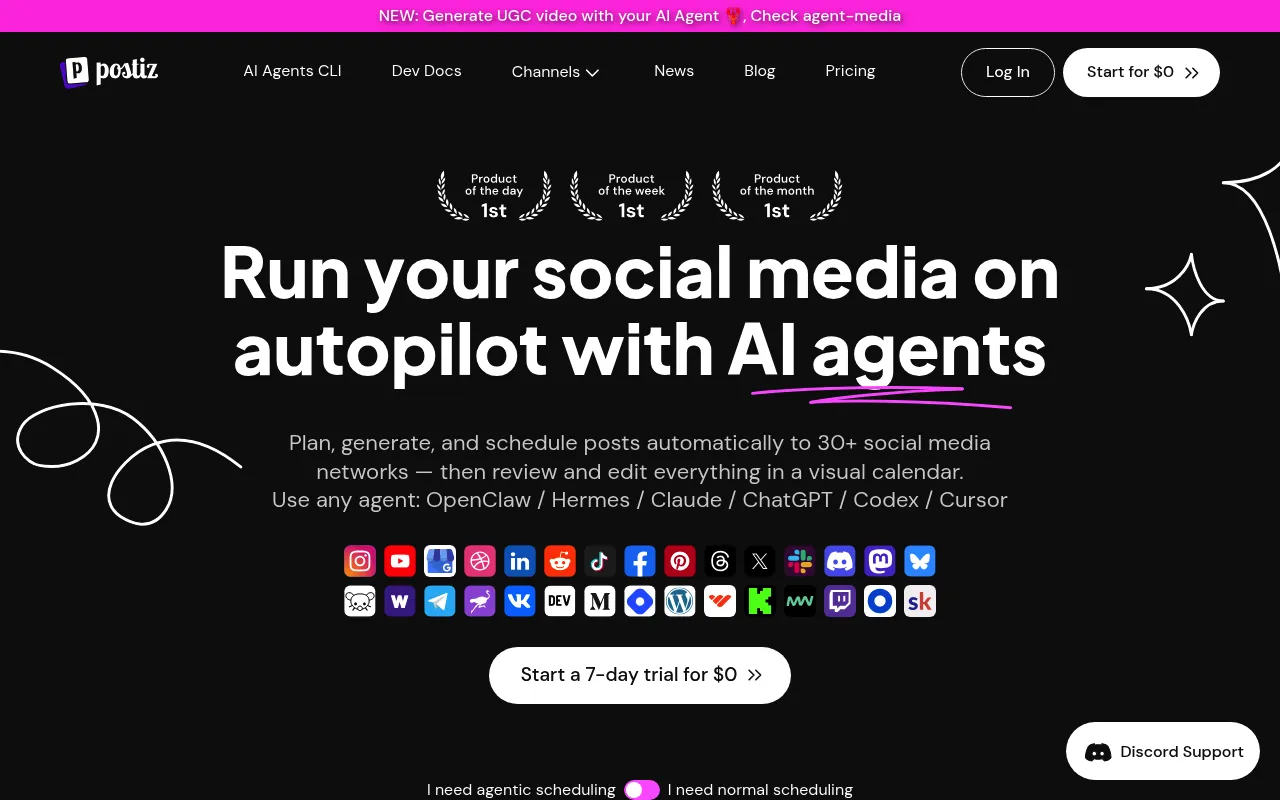
Postiz is a modern, open-source social media management tool that lets you schedule, analyze, and grow across all major networks from one place. With AI content generation, a marketplace, and self-hosting options, it's a favorite for creators and teams who want control and transparency.
- Open source and self-hostable
- AI-assisted content and image generation
- Schedule to 10+ platforms from one calendar
- Team collaboration and analytics
Postger
Simple, affordable multi-platform post scheduling.
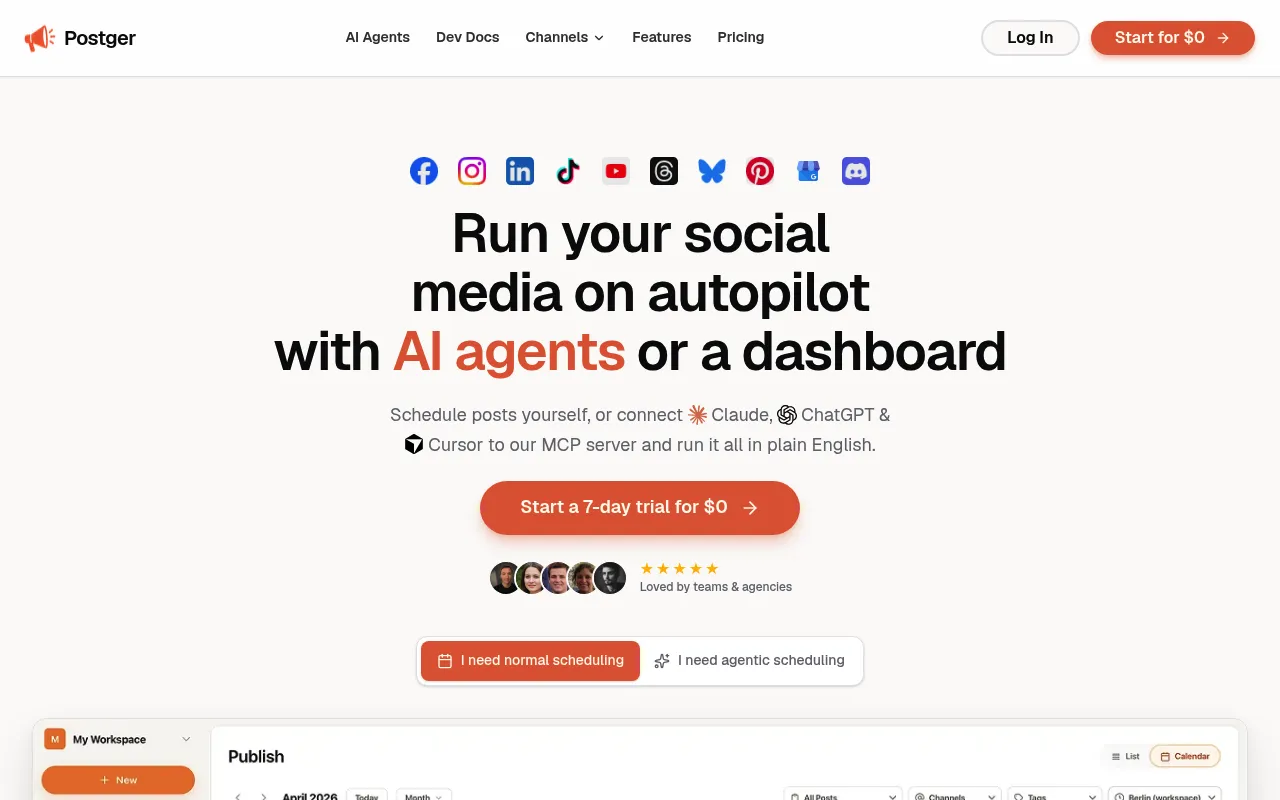
Postger is a streamlined scheduler built for solo creators and small teams who want to plan and publish across channels without a steep learning curve. It focuses on a clean calendar, quick composing, and reliable auto-publishing.
- Clean visual content calendar
- Cross-platform scheduling and auto-publish
- Quick multi-network composer
- Straightforward, low-cost pricing
Buffer
The classic, beginner-friendly scheduling tool.
Buffer is one of the longest-standing social media tools and remains a go-to for simplicity. It offers a clean queue-based workflow, a free plan, an AI assistant, and a landing-page builder — ideal for small businesses and creators getting started.
- Generous free plan
- Queue-based scheduling workflow
- AI assistant for captions and ideas
- Built-in link-in-bio and landing pages
Publer
Feature-rich scheduling with bulk and AI tools.
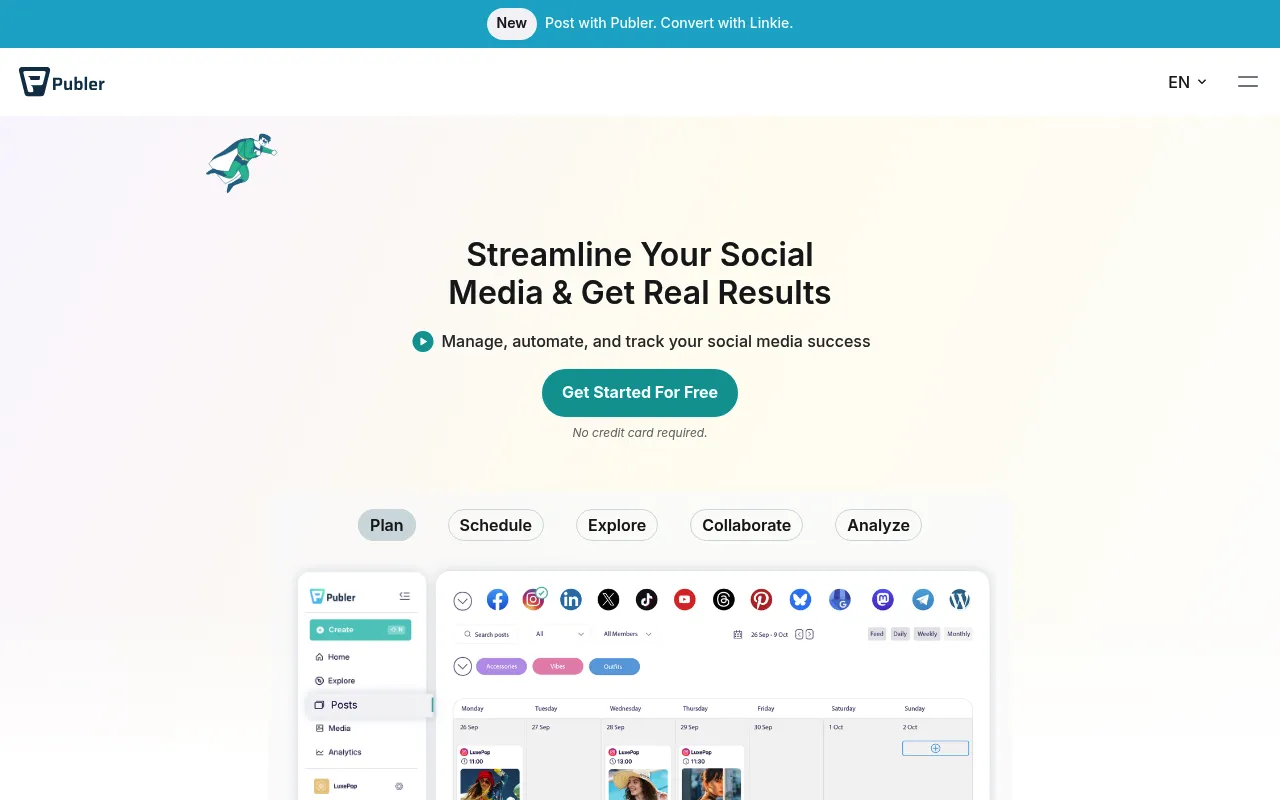
Publer packs a lot of power into an affordable package: bulk scheduling, recycling, watermarks, an AI assistant, and detailed analytics. It supports nearly every major platform and is popular with agencies managing multiple accounts.
- Bulk scheduling and CSV import
- Auto-recycle evergreen posts
- AI assistant and watermarks
- Supports 10+ networks including Threads
Hootsuite
Enterprise-grade social management and monitoring.
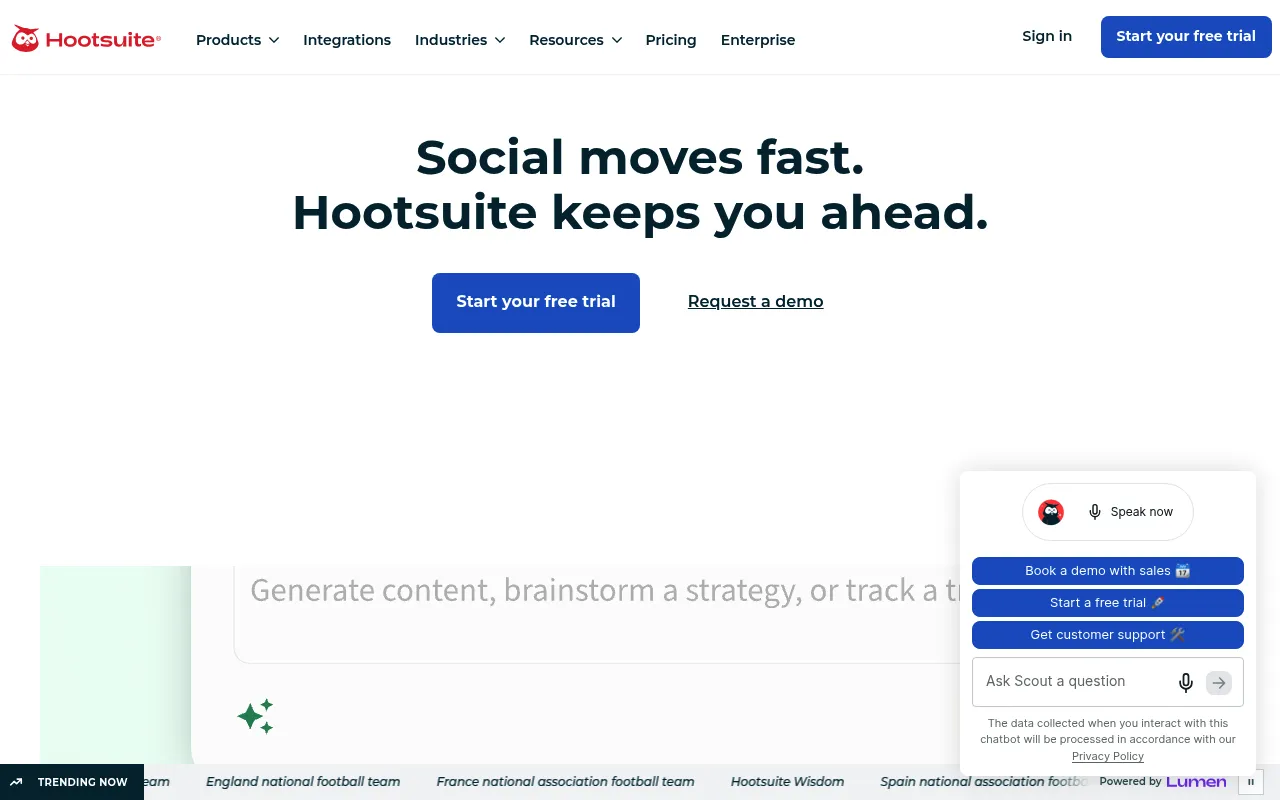
Hootsuite is the enterprise heavyweight, offering scheduling, social listening, team workflows, approvals, and deep analytics. It's more expensive than lightweight tools but remains the choice for larger organizations that need governance and reporting.
- Advanced team roles and approvals
- Social listening and monitoring streams
- In-depth analytics and reporting
- Ad management integrations
Postel
Best X (Twitter) tool for creators and businesses.
Postel is focused on X (Twitter), helping creators write engaging posts, schedule threads, and grow their audience. If your strategy centers on X, its dedicated composer and growth features make it a sharp, focused alternative to all-in-one suites.
- X-first composer and thread scheduling
- Engagement and growth features
- Content ideas for creators
- Simple, focused workflow
How to choose a social media scheduler
Start with the networks you actually post to. Most tools cover the big platforms — Instagram, Facebook, X, LinkedIn, TikTok, and YouTube — but support for newer or niche networks (Threads, Bluesky, Pinterest, Mastodon) varies. If your audience lives on a specific platform, make sure the tool supports it natively rather than through a clunky workaround.
Match the tool to your team size. Solo creators are best served by simple, affordable tools like Postger or Buffer, where you can plan a week of content in minutes. Agencies and larger teams need approval workflows, roles, and client management — the territory of Publer and Hootsuite. Postiz sits nicely in the middle, scaling from solo self-hosting to full team collaboration.
AI features have quickly become a differentiator. The best schedulers now help you write captions, repurpose posts across formats, generate images, and suggest optimal posting times. Postiz and Publer lean heavily into AI, which can meaningfully cut the time it takes to fill a content calendar — a real advantage if you publish daily.
Finally, consider analytics and pricing structure. Some tools charge per social channel (which adds up fast if you run many accounts), while others charge per workspace or user. Check how reporting works too: if proving ROI matters, you'll want engagement, reach, and best-time-to-post analytics built in rather than bolted on.
How often should you actually post?
Consistency beats volume. It's better to post three high-quality times a week, every week, than to burn out publishing daily for a month and then go quiet. A scheduler makes consistency realistic: batch a week or two of content in one session and let it publish automatically.
Cadence varies by platform. X and Threads reward frequent posting, Instagram and TikTok favor a few strong posts per week backed by Stories or short video, and LinkedIn rewards two to five thoughtful posts weekly. Tools like Postiz and Publer include best-time-to-post suggestions based on when your audience is active.
Whatever your cadence, plan around themes rather than scrambling for daily ideas. Batch content by pillar — educational, behind-the-scenes, promotional, and social proof — and use your scheduler's calendar view to keep the mix balanced across the week.
How we evaluated these tools
We compared each scheduler on platform coverage, ease of use, AI and automation features, collaboration and approval workflows, analytics depth, and pricing structure. We weighted real-world usefulness for creators and small teams heavily, and gave extra credit to tools that are transparent, flexible, or open source — like Postiz — since those tend to age well as your needs grow.
Frequently asked questions
What is the best open-source social media scheduler?
Postiz is the leading open-source social media scheduler. It supports self-hosting, AI content generation, and scheduling to more than ten platforms, making it a transparent, flexible alternative to closed tools like Buffer and Hootsuite.
Which social media scheduler is best for beginners?
Buffer and Postger are both excellent for beginners. Buffer offers a generous free plan and a simple queue workflow, while Postger keeps things affordable with a clean, easy-to-learn calendar.
Are there free social media scheduling tools?
Yes. Buffer and Publer both offer free plans, and Postiz is free when self-hosted. These are great ways to start scheduling before committing to a paid plan.
What's the best scheduler for X (Twitter)?
Postel is purpose-built for X (Twitter), with a dedicated composer, thread scheduling, and growth features. All-in-one tools like Postiz and Publer also support X if you post across multiple networks.
Can I schedule to Instagram, TikTok, and LinkedIn from one tool?
Yes. Postiz, Publer, Buffer, and Hootsuite all support scheduling to Instagram, TikTok, LinkedIn, Facebook, and more from a single dashboard. Note that some networks (like Instagram) have publishing restrictions set by the platform, so a few post types may require a manual push notification instead of full auto-publish.
Do I really need a scheduler, or can I post manually?
You can post manually, but a scheduler pays for itself in time saved. Batching a week of content in one sitting, auto-publishing at optimal times, and keeping every channel active without opening each app is a huge productivity win — especially if you manage more than one or two accounts.
Should I self-host or use a cloud scheduler?
Self-hosting (available with Postiz) gives you full control and can be free, but you'll manage updates, uptime, and API connections yourself. For most creators and small teams, a hosted cloud plan is simpler and worth the modest monthly cost. Choose self-hosting only if data ownership or customization is a priority.
The bottom line
For most creators and teams, Postiz is our top pick — it's open source, packed with AI features, and scales from a free self-hosted setup to full team collaboration. If you want the simplest possible start, Buffer and Postger are excellent and budget-friendly. Agencies juggling many accounts will get the most from Publer or Hootsuite, and if your entire strategy revolves around X, Postel is the sharpest focused choice.
Built a social media tool?
List your product on our directory for a permanent dofollow backlink, an AI-powered review, and exposure across Google and AI search engines.