
Overview
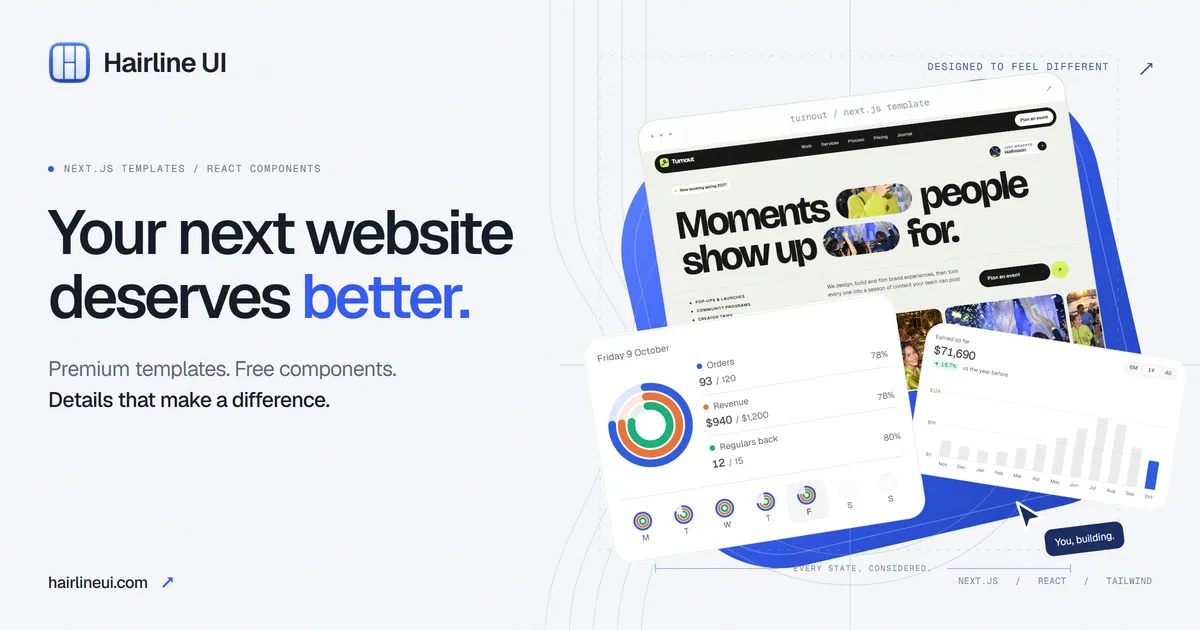
Hairline UI is a commercial catalog of Next.js landing page templates bundled with an openly accessible library of shadcn/ui components. The product sits at the intersection of design system and starter kit, aimed at teams that want a finished marketing site with designed states and motion rather than a blank repository.
Key Features
- 43 standalone Next.js templates: each entry ships as a complete, original project with its own concept, copy and animation rather than a recolored variant of one theme. The catalog covers AI tools, SaaS products, creative studios and fintech sites.
- 121 free shadcn/ui components: installed through a shadcn registry with source, interaction states and motion included, and no account required. Examples shown on the site include live cursors, voice note, diff review, live map, activity rings and earnings chart.
- MCP server for coding agents: connecting Claude Code, Codex, Cursor, Windsurf, Zed, Cline or Gemini CLI lets an agent locate a component, read its props and install it through the shadcn CLI instead of generating its own version.
- Single file customization: brand name, accent color, calls to action and links are centralized in a site.config.ts file, so a rebrand is a small edit before deploying to any host that runs Next.js.
- Live demo viewer: every template runs as an isolated build with desktop, laptop, tablet and phone widths available for inspection before purchase.
Pricing and Licensing
A free tier grants five templates (Relay, Tempo, Stillform, Fourteen and Index) to signed in users at no cost. Individual templates cost $39 as a one time payment, while the All Access Pass at $99 unlocks the full library plus every future release, a figure the site contrasts with $1,482 if each template were bought separately. All purchases carry a commercial license for unlimited personal and client projects, free updates and a 14 day money back guarantee, with no subscription.
Target Audience
Freelancers, agencies and startup founders building marketing sites on Next.js and React who want a designed starting point, and developer teams that prefer to install polished UI primitives directly into their own codebase.