
Overview
IndieShipped is a launch board and discovery directory built exclusively for independent makers. The homepage describes the service in plain terms as a launchpad for indie hackers who build on the internet, and the organising principle is rhythm: new projects appear once a week, every Monday, instead of pouring through a continuous submission queue. The three word promise on the masthead, launch, get discovered, grow, maps a funnel that any solo founder already knows by heart.
The product exists because shipping small software has become cheap while being noticed has become expensive. Daily launch aggregators generate enormous volume, so most submissions enjoy a brief window in a feed and then disappear. IndieShipped applies scarcity on purpose. A weekly cadence compresses attention into a single moment, and the platform pairs that with a stated pledge that each listing receives a page built to rank. Search visibility, in other words, is treated as part of the launch package rather than a chore handed back to the founder.
Competitive positioning is unambiguous. Product Hunt, BetaList, Hacker News, Peerlist, Uneed and MicroLaunch all crowd the same neighbourhood. IndieShipped differentiates through tempo, through an explicitly indie audience, and through permanent indexable project pages. Its current footprint is genuinely small. The hero reports three or more startups shipped by nine or more makers, and two of the four content shelves, Last Week's Best and Best Of The Month, still read nothing here yet. That is less a flaw in the concept than an honest snapshot of a platform in its opening chapter.
Key Features
Weekly Monday drops. The cadence is the product. A countdown clock on the homepage ticks through days, hours, minutes and seconds until the next release window, and every queued project becomes visible at the same instant. Batching submissions this way concentrates the audience into one visit rather than scattering it across a rolling feed, which gives a small product a realistic shot at being seen rather than a fleeting slot between larger announcements.
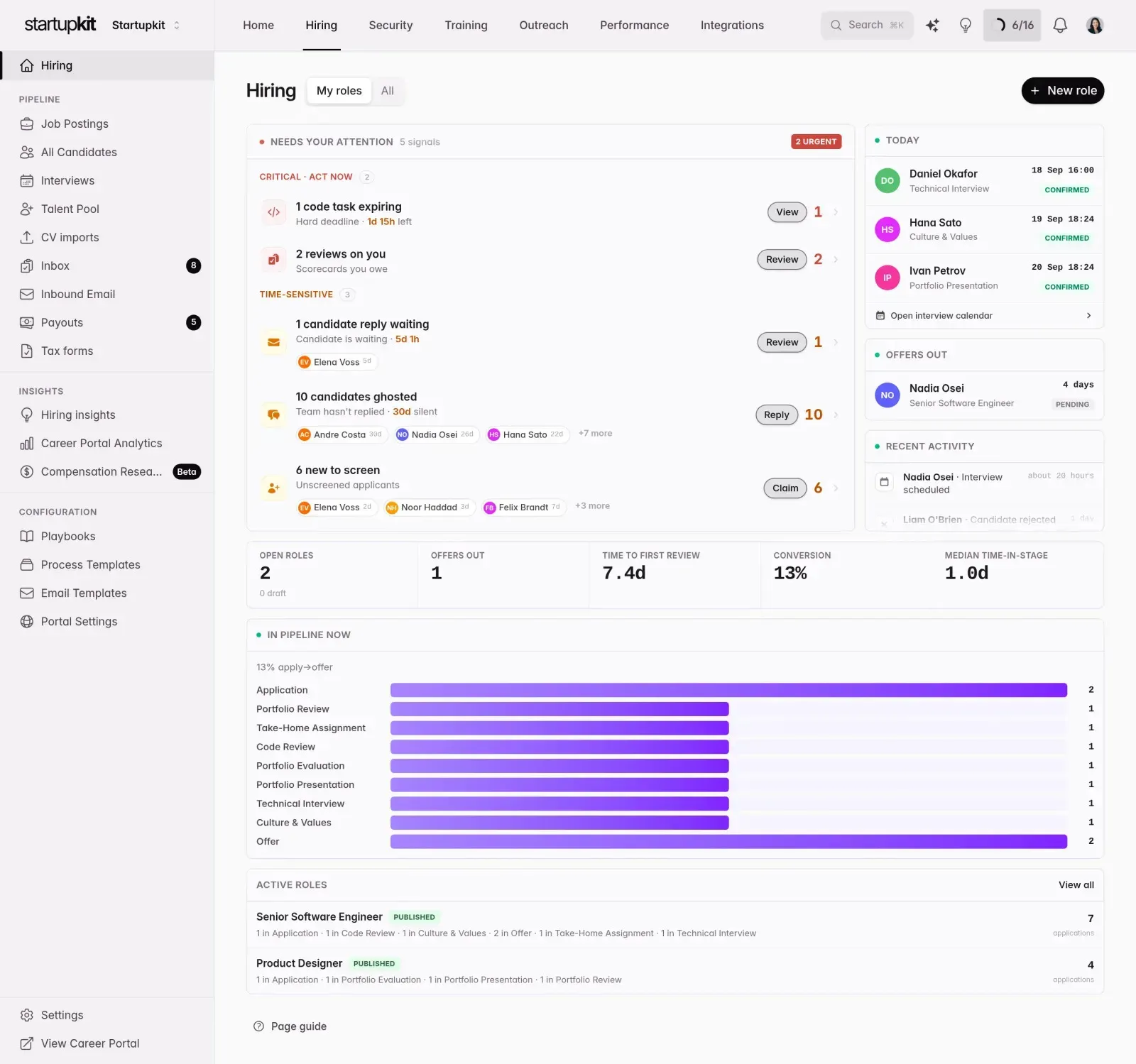
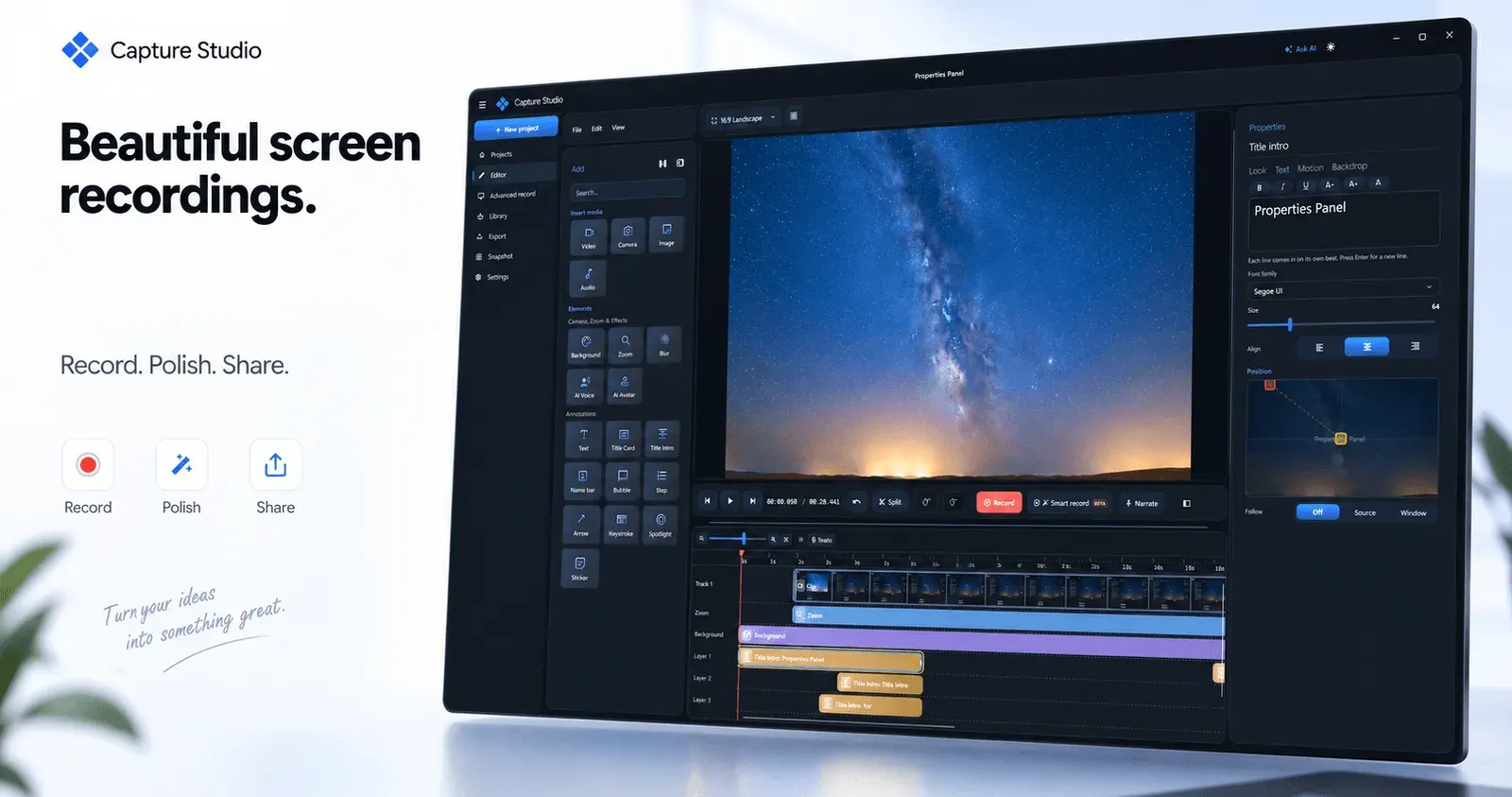
Spotlight placements. Directly beneath the hero sits an In The Spotlight band that blends editorial selection with purchasable inventory. Current Top Pick entries include Capture Studio, a Windows screen recorder that handles auto zoom, smooth cursor motion, AI voice-over and subtitles locally on the machine, and StartupKit, which bundles hiring, security disclosure, training and outreach in a single account from €6,99 per seat with a thirty day trial. A third card labelled Open Slot openly invites a brand to buy the position, and the homepage markets it as a quiet, well seen spot on the front page.
Upvotes and leaderboards. Every listing carries an upvote button with a live count. Those votes feed several downstream views: Shipping This Week, Last Week's Best, Best Of The Month, a winners archive filterable by week, month or hall of fame, and a trending page described as Heating up. The hierarchy gives an early vote more consequence than it would carry in a daily feed that resets every few hours.
A structured category directory. Projects are sorted into taxonomies such as Productivity, Content, HR, Education, Mobile Apps and Health, with live counts published on the homepage and a dedicated categories route listing everything. This is the mechanism that keeps the archive navigable once weekly drops begin to accumulate, and it doubles as a browse surface for visitors who arrive without a specific product in mind.
Project pages engineered for search. The marketing copy is explicit that each maker receives a page built to rank. Titles, descriptions and outbound links sit inside crawlable markup, and IndieShipped appends its own tracking parameter to outbound URLs, so a launch keeps producing measurable referral traffic long after the upvote window shuts. That addressability matters, because it lets a founder separate curiosity from actual visits.
A Monday email digest. The sidebar hosts a signup form promising one message per week containing the best new startups and nothing else. The same offer repeats in the footer and on the sign-up route, and the framing leans on the same scarcity argument that shapes the publishing schedule, with the current list described as nine or more founders.
Maker, alternatives and random routes. The footer exposes maker profiles, comparison pages, a surprise me random project link, a blog and a full category directory. Together they suggest an ambition to become a reference layer for the indie ecosystem rather than a single chronological feed.
How It Works
The journey starts at the submit route, where a maker creates an account and files a project. Fields observed in the interface point to a conventional listing format: a product name, a short tagline, a longer description, a logo asset and an outbound link. That outbound link is branded with an IndieShipped tracking parameter, which tells a founder exactly which clicks originated on the platform.
Once submitted, the project enters a queue and waits. The countdown clock governs everything. When Monday arrives the listing surfaces inside the Shipping This Week block, positioned by rank, and the weekly email goes out to the subscriber list at roughly the same time. Visitors browse the homepage, open project pages, cast upvotes and follow the outbound link to the product itself.
After the drop window closes, momentum is recycled. The strongest performers migrate into the winners archive and can be filtered by week, month or an all time hall of fame, while the trending view tracks projects gaining traction between drops. Requirements are deliberately light. There is no desktop client, no repository connection and no SDK, only a live product URL and a logo. The supporting interface is equally trim, with a command palette search reachable through a keyboard shortcut, a light and dark theme toggle, and a mobile sheet menu.
Use Cases
A solo developer who has spent six months building a niche utility with no audience is the clearest fit. Submission costs nothing beyond preparation time, and the Monday drop creates a single deadline around which a small announcement campaign can be organised. The resulting page keeps working as a permanent, indexable reference.
A designer or template author launching a boilerplate, icon set or Notion template benefits from the same mechanics for a different reason. Visual products reward a browsable gallery, and the category taxonomy places a design asset next to adjacent tools rather than burying it beneath unrelated hardware launches.
A bootstrapped team preparing a paid campaign can buy the Open Slot or one of the three site wide partner positions instead of renting a newsletter sponsorship elsewhere. Because the sponsorship block appears in the sidebar across the whole site rather than on a single post, exposure continues after launch day.
A newsletter writer or content operator looking for story leads can mine the winners archive and trending pages for weekly signal. The archive effectively functions as a curated research feed, and the category counts offer a rough barometer of which verticals are attracting indie attention.
A maker with an existing but stalled product can use a relaunch to reposition. A new tagline and refreshed description tested against a fresh cohort of upvoters often reveals whether the original framing or the underlying product was the problem.
Pricing & Value
The listing side of IndieShipped is free. There is no visible charge for creating a maker account, filing a project or receiving a permanent indexed page, and the monetisation sits entirely on the promotional layer. Two revenue surfaces are visible in the markup: the In The Spotlight band and a Partners sidebar containing an advertise link and a slot described as shown site wide, with three positions available. Exact figures are not published in the page markup, so anyone evaluating a campaign should consult the pricing page directly for current rates and terms.
Against free alternatives such as Hacker News and BetaList, the value case rests on permanence and placement rather than reach. Against paid newsletter sponsorships, the argument is duration, since a sidebar slot persists across every page instead of appearing once in an inbox. The honest caveat is that audience size is still modest, so a promotional purchase currently functions more as a bet on future growth than as a guaranteed traffic source.
Final Verdict
The core idea is sound and the execution is coherent. Batching launches into a Monday drop solves a real problem, namely the attention decay that plagues high volume boards, and tying each listing to a search optimised page treats the archive as an asset instead of a graveyard. The directory structure, the winners filters and the maker profiles all point in the same direction, which is toward a durable reference site rather than a disposable feed.
The counterweights are equally clear. The platform is new, the leaderboards are largely empty, and the promotional inventory depends on traffic that has not yet accumulated. There is no disclosed public API, no integration layer and no syndication beyond a single weekly email, so distribution remains tightly bound to the site itself. Makers who need volume on day one will still find larger boards more productive.
IndieShipped suits patient, self directed builders who value a permanent indexed page and a defined weekly deadline, and it suits brands willing to buy placement early at what is presumably a discount. Teams chasing immediate spikes or enterprise grade analytics should look elsewhere for now. For everyone else, submitting a project costs nothing, and the winners archive is worth bookmarking as the platform fills out.