
Overview
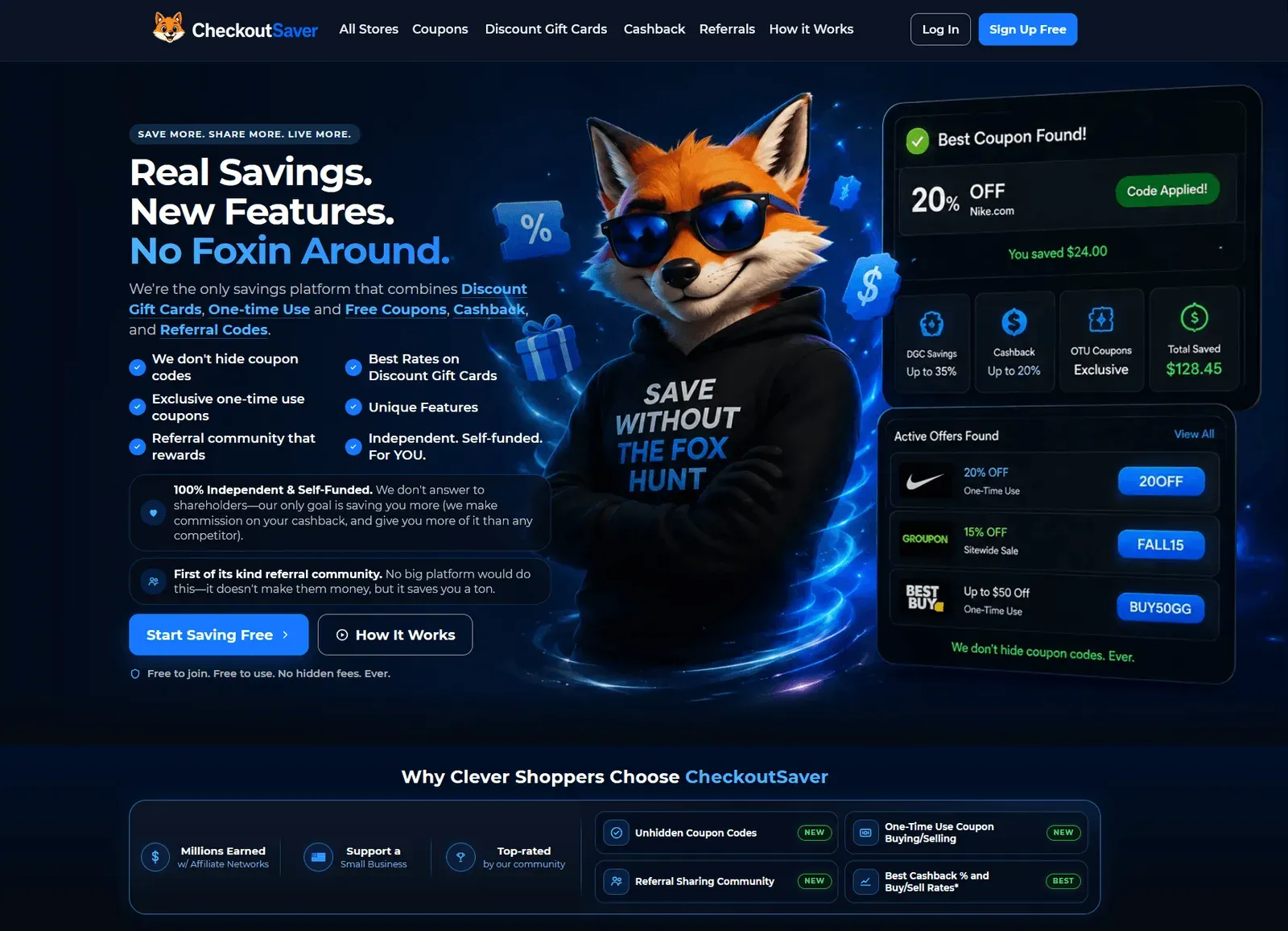
Checkout Saver is an independent, self-funded savings platform designed to help online shoppers stretch their budgets across thousands of retailers. It distinguishes itself by aggregating multiple saving mechanisms, cashback, discounted gift cards, coupon codes, and a referral-sharing community, into a single ecosystem. Rather than relying on investor funding or selling user data, the company says it earns through affiliate commissions and passes most of that revenue back to members. The platform is free to join and targets consumers who frequently shop online and want to consolidate their savings tools.
Key Features
Cashback program: Checkout Saver offers up to 35% cashback at more than 5,000 partner stores. Users activate the offer through the site or browser extension and receive a percentage of their purchase amount back. The company emphasizes that it gives customers a higher share of affiliate commissions than many competitors.
Discount gift cards: Members can buy gift cards below face value from retailers like Amazon, Target, and Best Buy, then stack those cards with other offers. The platform also buys unwanted gift cards, citing high payout rates around 85% of the card's value, which can exceed industry averages.
One-time use (OTU) coupons: Unlike typical coupon sites, Checkout Saver lets users buy and sell unique, single-use coupon codes. These codes are purported to be exclusive and cannot be found on other platforms, making them a differentiator for shoppers willing to trade.
Free coupons: The site provides conventional coupon codes without forcing users to click, reveal, sign up, or install extensions to view them. This transparent approach reduces the annoyance factor seen on older coupon aggregators.
Referral sharing community: A first of its kind feature, it allows users to share and use referral codes across hundreds of stores, enabling both parties to earn bonuses. This community-driven approach is unusual because the platform claims to make no money from referrals.
Browser extension and additional tools: The Chrome extension detects applicable coupon codes and cashback at checkout, automatically applying the best available savings. The platform also includes utility tools like an eBay bid sniper, price drop protection, receipt and warranty tracking, and a Credit Lab for monitoring credit scores.
Use Cases
Everyday online shopping: A consumer buying apparel from Gap or Banana Republic can install the extension, activate cashback, apply a visible coupon code, and pay with a discounted gift card, effectively stacking three methods at once. For a $25 purchase with a 10% coupon, 8% cashback, and a gift card purchased at 15% off, the effective savings reach roughly 38%.
High-value electronics and travel purchases: Shoppers at stores like FedEx, Hertz, or 1Password can earn cashback between 2% and 30%. Buying a discounted gift card beforehand adds another layer of savings, and the price drop tracker can alert users if the item they bought later drops in price.
Coupon trading and referrals: Savvy users who possess exclusive one-time-use codes can sell them on Checkout Saver's marketplace, while others can buy these codes to secure additional discounts. The referral community also helps users earn bonus credits by inviting friends to join.
Differentiators
What sets Checkout Saver apart is its independence and unusual feature set. The company repeatedly stresses that it is self-funded and does not answer to shareholders, which allows it to offer uncapped referral sharing, clearer coupon presentation, and higher gift card buy rates. Its OTU coupon marketplace and referral community are rarely found on mainstream savings sites. However, because the platform is relatively new and independently operated, its network of stores and brand recognition are smaller than those of established players like Rakuten or Honey. The mix of unconventional tools, from eBay bid sniping to warranty tracking, may appeal to power users, but could also make the product feel less focused for casual shoppers.